-

Comments on Greek painting, art, contemporary thought

Our blog is an artistic, cultural guide to the Greek landscapes. At the same time it offers an introduction to the history of Greek fine arts, Greek artists, mainly Greek painters, as well as to the recent artistic movements

Our aim is to present the Greek landscapes in a holistic way: Greek landscapes refer to pictures and images of Greece, to paintings and art, to poetry and literature, to ancient philosophy and history, to contemporary thought and culture...
--
--
greek artists, contemporary thought, greek painters, literature, greek paintings, modern greek artists


Showing posts with label Greek poets. Show all posts

Monday, May 30, 2011

No verse belongs to me...

Good poets pass away one day
not because they die
of heart failure or cancer
but because on their eyelids sprout
horrendous flowers...

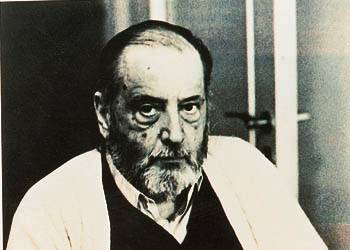
Yannis Varveris, (1955-25/5/2011)

Yannis Varveris

My Head

No verse belongs to me. My friends operated them all on.
My upright friends Brassens and Ferre. And the others.
And this is no head, it’s hate.
And mum’s plastic lilies I laid at the Polytechnic gate.*
This is no head that doesn’t know a bow from an arrow.
Not even killing would be a pleasure
I wouldn’t know what weapon I used.
This is no head that smokes
strips of belly dancers
flesh and bones of ideas and wiles away the time.
So I took a chisel and gave it the works
fought the good fight at last
shod in shabby sandals, no socks, and resolute curly hair.
But still my verses are unreadable;
inside and out all my poems
are zebra-striped and I the warder.
As outside so inside I found
the mote of Sartre
in their eyes
and in my eyes I found the same wolf
suckling without consuming me.

What more can a poem need
than thread through the needle’s eye
• in fact at night my room is full of threads –
even Homer managed it, I muse;
but where’s the needle that will prick my languid temples?
*Alludes to the uprising of the students of the National Technical University in November 1973, which was quelled by the military junta.

Hostia

There’s the house.
Around, mum’s water plants
blossoms for the bosom.
In the freezer some jolly little snakes
enabling me to change tongue
each time I vanquish flesh.

We should visit living poets

We should visit living poets
especially if we happen to dwell in the same town
drop in on them from time to time
because as we spend our quiet lives
certain that they too are alive – though maybe forgotten –
we hear the sad news.

Good poets pass away one day
not because they die
of heart failure or cancer
but because on their eyelids sprout
horrendous flowers.

At first they delve in medical books
then they consult the optician
ask botanists and gardeners
science gives up
offers vague cautious words
passersby and neighbours cross themselves.

Thus the poets gradually withdraw
to the seclusion of their homes
listening to old records
writing little
less and less
mediocre stuff.
Meantime in this confinement
the horrendous flowers begin to wilt
and wither
and the poets no longer go out
not even to the nearby kiosk for cigarettes.
They sit shrunken by the fireplace
seeking answers from the fire
which eventually throws out a spark
first landing on the dry petals
then on the dry stems
all over the body
and the entire house
the surroundings
brighten for a single moment

and they are burnt to ashes.

(translated from Greek by Yannis Goumas)

Wednesday, April 27, 2011

I am thinking of the stars that would claim this privilege...

Alexandros Baras
(1906-1990)


THE CLEOPATRA, THE SEMIRAMIS AND THE THEODORA

Once every week,
on a given day,
and always at the same hour,
three handsome ships,
the Cleopatra, the Semiramis, and the Theodora,
leave their berth
at nine o’clock
for Piraeus always,
for Brindisi and for Trieste
always.

Without manoeuvres or fuss
or hesitation
or unnecessary blowing on the whistle,
they put out to sea,
the Cleopatra, the Semiramis, and the Theodora,
like certain well-bred people
who take leave of their hosts
without uncouth and superfluous
handshaking.

They leave their berth
at nine o’clock,
for Piraeus always,
for Brindisi and for Trieste
always – rain or shine.
They sail
to daub the blue waters
of the Aegean and the Mediterranean

with smoke.
They sail to cast their lights
like topazes on the sea
at night.
They sail
laden with passengers and luggage….

The Cleopatra, the Semiramis, and the Theodora,
for years now
on the same route,
arriving on the same day
sailing at the same hour.

They resemble white-collar workers
who have become such time machines
that an office door
might come tumbling down
if they were to miss work
even for a single day.

(If the route is always the same
what if it is across an entire Mediterranean
or from one house to another neighbourhood?)
The Cleopatra, the Semiramis, and the Theodora
for a long time now and for many years
have felt the tyranny of boredom,
ploughing always the same route,
mooring always at the same ports.

If I were a Captain,
Yes – si j’etais roit! –
if I were a Captain
on the Cleopatra, the Semiramis, the Theodora,
if I were a Captain
with four gold stripes,
abandoned on this same route

year after year,
on a moonlit night,
in the middle of the sea,
I would climb to the bridge deck
and while the music from the first class saloon
played on,
with my best uniform,
my gold stripes
and shiny decorations,
I would trace a most perfect curve
from the bridge deck
into the water,
gold braid and all,
like a shooting star,
like a hero of inexplicable death.

ANN ARBOR REVIEW (USA), No. 10/11, 1970.
MUNDUS ARTIUM (USA), Vol. V, No. 3, 1972.
NEW GREECE, Athens, 1975.
HELLENIC QUARTERLY (Athens), No. 6, Autumn 2000.

THREE LAMPS

Three powerful lamps – the three together
produce a thousand candlepower of blinding light –
placed in the vertices
of an isosceles triangle
which forms between them on the ceiling
of this fashionable café – the only one
that will put up with us night after night –

What were we saying? – three powerful lamps
let out certain insolent
electric light cries
as they converse with each other.
(Now how three lamps can talk,
how they can cry out
without uttering a single sound,
only I and my friends
who sit with me
know it,
that is why we are such close
and inseparable friends at night.)

Three lamps… three cries….
Usually when we speak of cries
the term “sky-high” may be applied.
But here we cannot use it.
They cannot reach sky-high
since the impenetrable ceiling,
a concrete barrier, prevents them
from rising skywards,
and so they break against it
and fall on our senses
with immense cruelty!

Again, even if there were no question
of the term’s inadequacy,
even if these three cursed lamps
shone in the open air,
their cries would still not reach sky-high:

I am thinking of the stars
that would claim this privilege,
especially if it were July
• a beautiful, clear July night –
I am thinking of the stars’ all-powerful
illuminating rivalry,
the stars that aeons and aeons ago
formed a Trust,
the largest Trust, of light.

CAVE (New Zealand), No. 6. No date printed.

Thursday, April 21, 2011

Happy Easter!

Greek Easter & Greek poets...


Odysseus Elytis (1911-1996)

Odysseus Elytis

Drinking the sun of Corinth

Drinking the sun of Corinth
Reading the marble ruins
Striding across vineyards and seas
Sighting along the harpoon
A votive fish that slips away
I found the leaves that the sun’s psalm memorizes
The living land that passion joys in opening.

I drink water, cut fruit,
Thrust my hand into the wind’s foliage
The lemon trees water the summer pollen
The green birds tear my dreams
I leave with a glance
A wide glance in which the world is recreated
Beautiful from the beginning to the dimensions of the heart!

Wednesday, March 30, 2011

The tears of rivers flow always...

Andreas Embirikos

Insight of Morning Hours
For Yves Tanguy

Natural inclination
The dove of our heartbeat spreads it around
The tears of rivers flow always
They are tears of unconcealable happiness
They are lakes where snow-white storks lived long ago
No south-westerly settles in the sugar-canes
And even if at a gunshot the clouds lift
And rise into thinner layers
Where the corvettes spread the sails
Down on the earth a shadow searches for its lost body
The weather in the valley which stole it from her
Thickens the mists that hide it
The lake’s treasures are restless, their fur rises
Seaweed and elemental matter stir in the depths
A jellyfish weeps for yesterday’s transparency
Which will return with the first fishing-light
Before winter sets in
Before anyone thinks of lighting the beacon
Under which a blonde woman considers her future
The lighthouse-keeper bends to her lips and kisses them
As mariners kiss their symplegades.


Andreas Embirikos (1901-1975)

The Caryatids
For Yiorgos Gounaropoulos

O the breasts of youth
O the pallid waters of the fig-eaters
The cobblestones echo with the steps of morning people
Thicket of strength with your scarlet trees
Youth senses your significance
And springs up already at your edges
Feathery tresses frisk between the breasts of young girls
Who walk half-naked through your narrow streets
Their curls more lovely than those of Absalom
Amber drips between the locks
And the dark-haired ones hold ebony leaves
Ferrets sniff at their steps
The forest responds
The forest is a swarm of ants with lance-bearing legions
Here even the skylarks are stripping off their shadows
The railways cannot be heard
The day sighs
One of the her young daughters is playing with her breasts
No slap will do any good
A deer passes by holding in its mouth
The three cherries it found between the breasts of youth
The evening here is warm
The trees wrap themselves in their quietude
Now and then rocks of silence fall slowly into the clearing
Like light before it turns to day.

Tuesday, March 22, 2011

Our art: the ego’s most horrible disguise...

I always climb towards horror with greasy boots,
starving now from flame
fluently secular
fluently
in tears...


Human Figures by Prehistoric Artists
(Algeria, Tassili N'Ajjer)

Nikos Karouzos

Dross of Immortality

I always climb towards horror with greasy boots,
starving now from flame
fluently secular
fluently
in tears
eternal chorographer of
my diction
and unquestioned
garment.
Badly spent illumination in
mauve and other delays,
of an ignoble
horizon
barking the creed of the dog,
or an unbecominghallucinatory
Universe,
pharaonic queen through
mathematical piousness.
I am what’s
involuntary of existence
my physique is not a flower, it
is rawness,
I am disposed toward a thousand years
even if I fall eternally on bloody seconds;
the winds have pointed me out.

May 1989


Nikos Karouzos (1926-1990)

I Penetrated Matter Howling

Two seas pursue me: life and death two currents which, damn
them, are in my heart . . .
I am trying to find in my dog-
drunk head
/second possessive pronoun/intelligence – can’t be found. I didn’t petrify anything. Lets play the winds let’s sweetly
play the damned.
What a sensuously-seasoned
infant the poem and poor Jesus
wearing orange stained underwear is hung up every
year in spring.
Our art: the ego’s most
horrible disguise.

Wednesday, March 9, 2011

as my unfading nightlight in memory...

When you reach that other world, don't become a cloud,
don't become a cloud, and the bitter star of dawn,
so that your mother knows you, waiting at her door...


Nikos Gatsos (1911-1992)

Nikos Gatsos

Rosewater

When you reach that other world, don't become a cloud,
don't become a cloud, and the bitter star of dawn,
so that your mother knows you, waiting at her door.
Take a wand of willow, a root of rosemary,
a root of rosemary, and be a moonlit coolness
falling in the midnight in your thirsting courtyard.
I gave you rosewater to drink, you gave me poison,
eaglet of the frost, hawk of the desert.

Dark Mother

I brought you up with soil and water
a young swallow to be and yet a wild creature,
to have you as my alphabet-book in the times
and as my unfading nightlight in memory.

But you, looking for the source of dreams
near the Virgin Mary,
developed wings, refused the land
our dark, our first mother.

Wednesday, December 29, 2010

Comments & Greek artists, Greek painting: They came dressed up as "friends"...

Odysseas Elytis

They Came

They came
dressed up as “friends,”
came countless times, my enemies,
trampling the primeval soil.
And the soil never blended with their heel.
They brought
The Wise One, the Founder, and the Geometer,
Bibles of letters and numbers,
every kind of Submission and Power,
to sway over the primeval light.
And the light never blended with their roof.
Not even a bee was fooled into beginning the golden game,
not even a Zephyr into swelling the white aprons.
On the peaks, in the valleys, in the ports
they raised and founded
mighty towers and villas,
floating timbers and other vessels;
and the Laws decreeing the pursuit of profit
they applied to the primeval measure.
And the measure never blended with their thinking.
Not even a footprint of a god left a man on their soul,
not even a fairy’s glance tried to rob them of their speech.
They came
dressed up as “friends,”
came countless times, my enemies,
bearing the primeval gifts.
And their gifts were nothing else
but iron and fire only.
To the open expecting fingers
only weapons and iron and fire.
Only weapons and iron and fire.

Thursday, December 23, 2010

Comments & Greek artists, modern Greek artists: The Night is in my Interest...

the night is in my interest.
First of all, it reduces ambition; moreover,
it corrects thoughts; then,
it collects the grief and makes it more bearable...

Nikos Karouzos

Suspension

In the sky, possibilities
are naught but thrilling.
As I was hanging in the air
holding on to a pure white cloud
on a mythic screen of the imagination,
I observed the quotations
of the elements of my blood
and heard a dazzling musical act
practically non-human
on the left of the geographical map
at the point at which Mt. Terror lies
always wreathed in lightning
and blinding storms.
I went up there once.
There I first heard the song
that said: we belong to water.
And on the other side Ecclesiastes shined.
For some time now I’ve known that the blood
contains all the mystery
which is given through signs
to the human mind, and complete discontinuity.
The circulation perhaps?
queried the brilliant pathologist.
And suddenly
Leonardo came to mind
who knew what exquisite information derives from the body.


Nikos Karouzos (1926-1990)

The Night is in my Interest

Indeed the night is in my interest.
First of all, it reduces ambition; moreover,
it corrects thoughts; then,
it collects the grief and makes it more bearable;
it dissects the silence with respect; in the gardens
it stresses smell,
but above all, night envelops.

Wednesday, November 3, 2010

Comments & Greek artists, contemporary Greek artists: Joy of night, oh sonorous lights...

Greek poets & Greek artists, modern Geek artists, painters


Yannis Stavrou, Nocturnal, oil on canvas

Time approaches visions
on tiptoe...

Nikos Karouzos

Poem on a Tape Recorder

Joy of night, oh sonorous lights,
marvelous evening
the colored noise of the city
divided up my loneliness, sometimes yellow,
orange, blue, and now red
dyeing my gait pure green.
Love had white marks.
Stop. Rewind.
The turmoil bore the white marks of the world.
The clouds invisible.
No.
The angel radiates like marble
in the deserts of the moon, in the honeysuckle white
death is duped and the night
is amused with shooting stars.
No, no.
Time approaches visions
on tiptoe.
Greed!
I should have further submerged
the grief within my soul.
No.
The cricket ornaments expanses.
The night comes down the stairway of darkness
sits on the passion of Mary.
All alone the busts breathe in the gardens.
Stop. Everything is erased.
I want to escape from words.
I’m sick of it.
Better it would be to listen to what on the next balcony
two perennial old ladies are saying;
sitting there by the hour.

Monday, November 1, 2010

Comments &Greek artists, Greek painting: as night falls in autumn...

Autumn landscapes & Greek artists, Greek painting, Greek painters


Yannis Stavrou, Autmn Landscape, oil on canvas

Miltos Sachtouris

Autumn

What’s the girl looking for
in the darkness of the chair?
quickly
as night falls in autumn
she undresses
with clouds before her eyes
with the rain inside her head
with the needle in her heart
she removes the stockings
removes the flowers
discards the halo

outside the time’s leaves
are dyed in blood

Wednesday, October 27, 2010

Comments & Greek artists, modern Greek artists: Where the corvettes spread the sails Down on the earth a shadow searches for its lost body...

Ships in Greek painting, Greek artists, painters


Yannis Stavrou, Piraeus Port II,oil on canvas

Andreas Embirikos

Insight of Morning Hours

Natural inclination
The dove of our heartbeat spreads it around
The tears of rivers flow always
They are tears of unconcealable happiness
They are lakes where snow-white storks lived long ago
No south-westerly settles in the sugar-canes
And even if at a gunshot the clouds lift
And rise into thinner layers
Where the corvettes spread the sails
Down on the earth a shadow searches for its lost body
The weather in the valley which stole it from her
Thickens the mists that hide it
The lake’s treasures are restless, their fur rises
Seaweed and elemental matter stir in the depths
A jellyfish weeps for yesterday’s transparency
Which will return with the first fishing-light
Before winter sets in
Before anyone thinks of lighting the beacon
Under which a blonde woman considers her future
The lighthouse-keeper bends to her lips and kisses them
As mariners kiss their symplegades.

Thursday, October 14, 2010

Comments & Greek painting, Greek artists: Waiting for the Barbarians...

Greek poets & Greek artists, moden Greek artists


Yannis Stavrou, Acropolis II, oil on canvas

And now, what's going to happen to us without barbarians?
They were, those people, a kind of solution...

Konstantinos Kavafis

Waiting for the Barbarians

What are we waiting for, assembled in the forum?

The barbarians are due here today.

Why isn't anything happening in the senate?
Why do the senators sit there without legislating?

Because the barbarians are coming today.
What laws can the senators make now?
Once the barbarians are here, they'll do the legislating.

Why did our emperor get up so early,
and why is he sitting at the city's main gate
on his throne, in state, wearing the crown?

Because the barbarians are coming today
and the emperor is waiting to receive their leader.
He has even prepared a scroll to give him,
replete with titles, with imposing names.

Why have our two consuls and praetors come out today
wearing their embroidered, their scarlet togas?
Why have they put on bracelets with so many amethysts,
and rings sparkling with magnificent emeralds?
Why are they carrying elegant canes
beautifully worked in silver and gold?

Because the barbarians are coming today
and things like that dazzle the barbarians.

Why don't our distinguished orators come forward as usual
to make their speeches, say what they have to say?

Because the barbarians are coming today
and they're bored by rhetoric and public speaking.

Why this sudden restlessness, this confusion?
(How serious people's faces have become.)
Why are the streets and squares emptying so rapidly,
everyone going home so lost in thought?

Because night has fallen and the barbarians have not come.
And some who have just returned from the border say
there are no barbarians any longer.

And now, what's going to happen to us without barbarians?
They were, those people, a kind of solution.

Tuesday, October 12, 2010

Comments & Greek artists, painters: The eye languidly learns to illumine the invisible, exerts itself to see things...

Greek poets & Greek artists, contemporary Greek artists


Yannis Stavrou, Man & Tree, oil on canvas

Haris Vlavianos

Pascal's Will

I

The eye languidly
learns to illumine the invisible,
exerts itself to see things
the moment when their essence flees,
the moment when withdrawn from their temporary form
they lose the (holy) aura of presence.


II

Just before he closed his eyes
he asked his sister
to stitch inside his coat’s lining,
(without even looking at it),
the note that contained
the “incontestable proof
of God’s existence”,
convinced that upon opening it
he would see His merciful,
almighty face.


III

The glacial figure of the philosopher
impressed upon his sister’s gaze,
(we can visualize the scene,
the space where it unravels),
and the forsaken – forever now –
content of its last-minute thought.

IV


The night casually spreading
on his lifeless body
has aptly interpreted
his last wish:
not as the need
of a self-centered believer
eager to disclose the truth
that he has just invented
but as the desire
to hand over to the progeny
the void letter
of a dignifying,
profoundly human gesture.


V


The inevitable knowledge of a new reality.
And the mind that now rests
(reconciled with the perpetual music of concepts)
inside its ethereal creations.
The vindication of the thinker that alone,
without the blessings of the specters,
has brought to the world the measures
of his own annihilation.

Wednesday, July 28, 2010

Comments & Greek artists, modern Greek painters: They came dressed up as “friends,” came countless times, my enemies...

Greek poets & Greek artists, Greek painters, modern Greek artists


Yannis Stavrou, Warehouses, Thermaikos, oil on canvas

They came
dressed up as “friends,”
came countless times, my enemies,
bearing the primeval gifts.
And their gifts were nothing else
but iron and fire only...

Odisseas Elytis

They Came

They came
dressed up as “friends,”
came countless times, my enemies,
trampling the primeval soil.
And the soil never blended with their heel.
They brought
The Wise One, the Founder, and the Geometer,
Bibles of letters and numbers,
every kind of Submission and Power,
to sway over the primeval light.
And the light never blended with their roof.
Not even a bee was fooled into beginning the golden game,
not even a Zephyr into swelling the white aprons.
On the peaks, in the valleys, in the ports
they raised and founded
mighty towers and villas,
floating timbers and other vessels;
and the Laws decreeing the pursuit of profit
they applied to the primeval measure.
And the measure never blended with their thinking.
Not even a footprint of a god left a man on their soul,
not even a fairy’s glance tried to rob them of their speech.
They came
dressed up as “friends,”
came countless times, my enemies,
bearing the primeval gifts.
And their gifts were nothing else
but iron and fire only.
To the open expecting fingers
only weapons and iron and fire.
Only weapons and iron and fire.

Thursday, July 15, 2010

Comments & Greek artists, Greek painters: What a moon there is tonight...

Greek poets & Greek artists, modern Greek artists, Greek painters


Yannis Stavrou, Moonlight, oil on canvas

Yannis Ritsos
Moonlight Sonata
(excerpt)

A spring evening. A large room in an old house. A woman of a certain age, dressed in
black, is speaking to a young man. They have not turned on the lights. Through both
windows the moonlight shines relentlessly. I forgot to mention that the Woman in
Black has published two or three interesting volume of poetry with a religious flavor.
So, the Woman in Black is speaking to the Young Man:


Let me come with you. What a moon there is tonight!
The moon is kind – it won’t show
that my hair turned white. The moon
will turn my hair to gold again. You wouldn’t understand.
Let me come with you.

When there’s a moon the shadows in the house grow larger,
invisible hands draw the curtains,
a ghostly finger writes forgotten words in the dust
on the piano – I don’t want to hear them. Hush.

https://blogger.googleusercontent.com/img/b/R29vZ2xl/AVvXsEgM8Gyilabxssodf82DwrIGfwpA5552ShwxFsv5Yh99UiJErTAZnkRALNCVss2-iUdYa7OJmeYyg-JSdJgaYx8VrkEgTFS_XgJWgz7TsKb8I3Xyi8GyiO5-Z0ChX00WAySm3bkGdDQlhAKg/s400/Giannis_Ritsos.jpg
Yannis Ritsos (1909-1990)

Let me come with you
a little farther down, as far as the brickyard wall,
to the point where the road turns and the city appears
concrete and airy, whitewashed with moonlight,
so indifferent and insubstantial
so positive, like metaphysics,
that finally you can believe you exist and do not exist,
that you never existed, that time with its destruction never existed.
Let me come with you.

We’ll sit for a little on the low wall, up on the hill,
and as the spring breeze blows around us
perhaps we’ll even imagine that we are flying,
because, often, and now especially, I hear the sound of my own dress
like the sound of two powerful wings opening and closing,
you feel the tight mesh of your throat, your ribs, your flesh,
and when you enclose yourself within the sound of that flight
you feel the tight mesh of your throat, your birds, your flesh,
and thus constricted amid the muscles of the azure air,
amid the strong nerves of the heavens,
it makes no difference whether you go or return
and it makes no difference that my hair has turned white
(that is not my sorrow – my sorrow is
that my heart too does not turn white).
Let me come with you.

I know that each one of us travels to love alone,
alone to faith and to death.
I know it. I’ve tried it. It doesn’t help.
Let me come with you.

This house is haunted, it preys on me –
what I mean is, it has aged a great deal, the nails are working loose,
the portraits drop as though plunging into the void,
the plaster falls without a sound
as the dead man’s hat falls from the peg in the dark hallway
as the worn woolen glove falls from the knee of silence
or as moonbeam falls on the old, gutted armchair.

Once it too was new – not the photograph that you are starting at so dubiously –
I mean the armchair, very comfortable, you could sit in it for hours
with your eyes closed and dream whatever came into your head
– a sandy beach, smooth, wet, shining in the moonlight,
shining more than my old patent leather shoes that I send each month to the shoeshine shop on the corner,
or a fishing boat’s sail that sinks to the bottom rocked by its own breathing,
a three-cornered sail like a handkerchief folded slantwise in half only
as though it had nothing to shut up or hold fast
no reason to flutter open in farewell. I have always has a passion for handkerchiefs,
not to keep anything tied in them,
no flower seeds or camomile gathered in the fields at sunset,
nor to tie them with four knots like the caps the workers wear on the construction site across the street,
nor to dab my eyes – I’ve kept my eyesight good;
I’ve never worn glasses. A harmless idiosyncracy, handkerchiefs.

Now I fold them in quarters, in eighths, in sixteenths
to keep my fingers occupied. And now I remember
that this is how I counted the music when I went to the Odeion
with a blue pinafore and a white collar, with two blond braids
– 8,16,32,64 –
hand in hand with a small friend of mine, peachy, all light and picked flowers,
(forgive me such digressions – a bad habit) – 32, 64 – and my family rested
great hopes on my musical talent. But I was telling you about the armchair –
gutted – the rusted springs are showing, the stuffing –
I thought of sending it next door to the furniture shop,
but where’s the time and the money and the inclination – what to fix first?
I thought of throwing a sheet over it – I was afraid
of a white sheet in so much moonlight. People sat here
who dreamed great dreams, as you do and I too.
and now they rest under earth untroubled by rain or the moon.
Let me come with you.

We’ll pause for a little at the top of St. Nicholas’ marble steps,
and afterward you’ll descend and I will turn back,
having on my left side the warmth from a casual touch of your jacket
and some squares of light, too, from small neighborhood windows
and this pure white mist from the moon, like a great procession of silver swans –
and I do not fear this manifestation, for at another time
on many spring evenings I talked with God who appeared to me
clothed in the haze and glory of such a moonlight –
and many young men, more handsome even than you, I sacrificed to him –
I dissolved, so white, so unapproachable, amid my white flame, in the whiteness of moonlight,
burnt up by men’s vocarious eyes and the tentative rapture of youths,
besieged by splendid bronzed bodies,
strong limbs exercising at the pool, with oars, on the track, at soccer (I pretended not to see them),
foreheads, lips and throats, knees, fingers and eyes,
chests and arms and things (and truly I did not see them)
– you know, sometimes, when you’re entranced, you forget what entranced you, the entrancement alone is enough –
my God, what star-bright eyes, and I was lifted up to an apotheosis of disavowed stars
because, besieged thus from without and from within,
no other road was left me save only the way up or the way down. – No, it is not enough.
Let me come with you.

Tuesday, July 13, 2010

Comments & Greek artists, modern Greek artists: They placed him there where the wind blows most wild...

Greek poets & Greek artists, Greek painters, modern Greek painting


Yannis Stavrou, Change of Night Patrol, oil on canvas

there’ll be a suspicion of sea
and, from above, in a now terrifying darkness
a white bird will recite my songs...

Miltos Sachtouris

The Poet

When they find me on the cross of my death
the sky around will have reddened far beyond
there’ll be a suspicion of sea
and, from above, in a now terrifying darkness
a white bird will recite my songs.

http://pandoxeio.files.wordpress.com/2009/07/getimage.jpg
Miltos Sachtouris (1919-2005)

The Canary

They placed him there where the wind blows most wild
they pledged him to the bitter frosts
they gave him a black garment
and a red tie
a sun pierced with a nail that would drip
black glasses
blood on top of the poison
a staff
and a canary
they placed him there where pain springs
they gave him to death
that he’d shine of silver

The Saint

He stared deep
deep
into the well
its depth
had no end
in this life

the flesh peeled off
and fell bit by bit
soon nothing would remain
but his skeleton

I’ve decided - he said -
I’ve finally decided
I’ll live among the drowned
and among the lepers

Monday, July 5, 2010

Comments & Greek artists, modern Greek artists: marvelous evening the colored noise of the city...

Greek poets & Greek artists, Greek painters, Greek painting


Yannis Stavrou, Thessaloniki V, oil on canvas

Joy of night, oh sonorous lights,
marvelous evening
the colored noise of the city...

Nikos Karouzos

Poem on a Tape Recorder

Joy of night, oh sonorous lights,
marvelous evening
the colored noise of the city
divided up my loneliness, sometimes yellow,
orange, blue, and now red
dyeing my gait pure green.
Love had white marks.
Stop. Rewind.
The turmoil bore the white marks of the world.
The clouds invisible.
No.
The angel radiates like marble
in the deserts of the moon, in the honeysuckle white
death is duped and the night
is amused with shooting stars.
No, no.
Time approaches visions
on tiptoe.
Greed!
I should have further submerged
the grief within my soul.
No.
The cricket ornaments expanses.
The night comes down the stairway of darkness
sits on the passion of Mary.
All alone the busts breathe in the gardens.
Stop. Everything is erased.
I want to escape from words.
I’m sick of it.
Better it would be to listen to what on the next balcony
two perennial old ladies are saying;
sitting there by the hour.


Nikos Karouzos (1926-1990)

Dross of Immortality

I always climb towards horror with greasy boots,
starving now from flame
fluently secular
fluently in tears
eternal chorographer of my diction
and unquestioned garment.
Badly spent illumination in mauve and other delays,
of an ignoble horizon
barking the creed of the dog, or an unbecoming
hallucinatory Universe,
pharaonic queen through mathematical piousness.
I am what’s involuntary of existence
my physique is not a flower, it is rawness,
I am disposed toward a thousand years even if I fall
eternally on bloody seconds;
the winds have pointed me out.

Tuesday, June 22, 2010

Comments & Greek artists, Greek painting: the Greece of myths and dreams...

Greek poets & Greek artists, Greek painting, Greek painters


Yannis Stavrou, At Anchorage, oil on canvas

The Dionysian and Apollonian elements of life are artistically woven together in his poetry...

He lead us to the Greece of myths and dreams - to the Greece that we have lost...

Angelos Sikelianos
On Acrocorinth

The sinking sun set all the Rock aglow—
The heady fragrance of seaweed that had
Been blowing from the water down below
Began to drive my little stallion mad.

His bit was foamy, and his eyes rolled white—
And suddenly he struggled to break free
(Although I checked the reins with all my might)
To launch himself into vacuity.


Was it the hour? Aromas growing stronger?
The salt-tang of the deep, its briny sting?
Was it the far-off breathing of the trees?


O had the wind held out a little longer
I know the steed I gripped with reins and knees
Would have been Pegasus and taken wing!


Yannis Stavrou, Angelos Sikelianos (1884-1951)
(mixed technique)

Sunday, May 9, 2010

Comments & Greek artists, modern Greek painters: there’s always someone suitable around...

Greek Poets & Greek artists, modern Greek painters


Yannis Stavrou, Moon Shine, oil on canvas

Konstantinos Kavafis

From the School of the Renowned Philosopher

For two years he studied with Ammonios Sakkas,
but he was bored by both philosophy and Sakkas.

Then he went into politics.
But he gave that up. That Prefect was an idiot,
and those around him, somber-faced officious nitwits:
their Greek—poor fools—absolutely barbaric.

After that he became
vaguely curious about the Church: to be baptized
and pass as a Christian. But he soon
changed his mind: it would certainly have caused a row
with his parents, ostentatious pagans,
and—horrible thought—
they would have cut off at once
their extremely generous allowance.

But he had to do something. He began to haunt
the corrupt houses of Alexandria,
every secret den of debauchery.

In this fortune favored him:
he’d been given an extremely handsome figure.
And he enjoyed the divine gift.

His looks would last
at least another ten years. And after that?
Maybe he’ll go back to Sakkas.
Or if the old man has died meanwhile,
he’ll go to another philosopher or sophist:
there’s always someone suitable around.

Thursday, May 6, 2010

Comments & Greek painters, Greek artists: And from the beginning, Valleys, Mountains, Trees, Rivers...

Greek poets & Greek artists, contemporary Greek painters


Yannis Stavrou, Morning At the Port, oil on canvas

A new sun, not yet ripe,

That couldn’t manage to dislodge the hoarfrost of lambs from live clover, but, before even casting a ray, could divine the oracles of Erebus...

Odysseas Elytis
The Sleep of the Brave

They will smell of incense, and their faces are burnt by their crossing through the Great Dark Places.

There where they were suddenly flung by the Immovable

Face-down, on ground whose smallest anemone would suffice to turn the air of Hades bitter

(One arm outstretched, as though straining to be grasped by the future, the other arm under the desolate head, turned on its side,

As though to see for the last time, in the eyes of a disembowelled horse, the heap of smoking ruins)—

There time released them. One wing, the redder of the two, covered the world, while the other, delicate, already moved through space,

No wrinkle or pang of conscience, but at a great depth

The old immemorial blood that began painfully to etch, in the sky’s blackness,

A new sun, not yet ripe,

That couldn’t manage to dislodge the hoarfrost of lambs from live clover, but, before even casting a ray, could divine the oracles of Erebus...

And from the beginning, Valleys, Mountains, Trees, Rivers,

A creation made of vindicated feelings now shone, identical and reversed, there for them to cross now, with the Executioner inside them put to death,

Villagers of the limitless blue:

Neither twelve o’clock striking in the depths nor the voice of the pole falling from the heights retracted their footsteps.

They read the world greedily with eyes now open forever, there where they were suddenly flung by the Immovable,

Face-down, and where the voltures fell upon them violently to enjoy the clay of their guts and their blood.